


HanuiT Solutions

Business Growth- HanuiT solutions

Achieving Better ROI: Best Practices for Business Growth

Achieving Better ROI: Best Practices for Business Growth

In today’s competitive market, achieving better Return on Investment (ROI) is essential for sustainable business growth. ROI is not just a financial metric; it reflects how effectively a business utilizes its resources to generate profit. With the right strategies, companies can optimize their ROI, ensuring they grow steadily and achieve their long-term goals. This article explores best practices that can help businesses enhance their ROI, fostering sustainable growth.

Understanding ROI and Its Importance

Return on Investment (ROI) is a performance measure used to evaluate the efficiency or profitability of an investment. It is calculated by dividing the net profit from an investment by the cost of the investment. ROI is a critical metric for businesses as it helps them assess the success of their investments, whether in marketing, technology, or human resources.

For business growth, improving ROI means making smarter decisions about where to allocate resources. High ROI indicates that the business is getting a good return on its investments, which is a key driver of growth. On the other hand, a low ROI suggests that the business may need to re-evaluate its strategies to ensure resources are being used effectively.

Best Practices for Achieving Better ROI

1. Focus on Customer Retention

One of the most effective ways to improve ROI is by focusing on customer retention. Acquiring new customers is often more expensive than retaining existing ones. Loyal customers not only provide repeat business but are also more likely to recommend your products or services to others, leading to organic growth.

To enhance customer retention, businesses should invest in excellent customer service, loyalty programs, and personalized marketing strategies. Regularly engaging with customers through follow-up emails, special offers, and feedback surveys can also strengthen customer relationships, leading to higher retention rates and, consequently, better ROI.

 Also read: Top Tips to Enhance ROI on Your Marketing Campaigns

2. Optimize Marketing Strategies

Marketing is a significant area where businesses can either gain or lose ROI. To maximize the effectiveness of marketing efforts, businesses should focus on targeted marketing strategies. This involves understanding your target audience, segmenting your market, and crafting personalized marketing messages that resonate with each segment.

Utilizing data analytics can help businesses track the performance of their marketing campaigns in real-time. By analyzing metrics such as conversion rates, click-through rates, and customer acquisition costs, businesses can fine-tune their strategies to improve ROI. Additionally, investing in content marketing, search engine optimization (SEO), and social media marketing can drive more qualified leads to your business, boosting growth and ROI.

3. Invest in Employee Development

Employees are one of the most valuable assets for any business. Investing in employee development not only enhances their skills but also increases their productivity, leading to better business outcomes. Training programs, workshops, and continuous learning opportunities can equip employees with the necessary skills to perform their roles more effectively.

Moreover, fostering a positive work environment and offering competitive compensation can improve employee satisfaction and reduce turnover rates. When employees are motivated and engaged, they contribute more to the business, leading to higher efficiency and, ultimately, better ROI.

 Also read: Why Your ROI is Falling Short (And How to Fix It)

4. Streamline Operations

Operational inefficiencies can significantly impact ROI. Streamlining operations by automating repetitive tasks, optimizing supply chains, and improving workflow processes can lead to cost savings and increased productivity. Businesses should regularly review their operations to identify bottlenecks and areas for improvement.

Implementing technologies such as Enterprise Resource Planning (ERP) systems or Customer Relationship Management (CRM) software can also enhance operational efficiency. These tools provide real-time data and insights, enabling businesses to make informed decisions quickly, thereby improving ROI and supporting business growth.

5. Leverage Technology and Innovation

In the digital age, leveraging technology is crucial for achieving better ROI. Investing in the right technology can help businesses automate processes, reduce costs, and improve customer experiences. For example, adopting e-commerce platforms, mobile apps, or cloud-based solutions can open up new revenue streams and improve operational efficiency.

Innovation is also key to staying ahead of the competition. Businesses should continuously explore new ways to improve their products, services, and processes. Whether it’s through research and development, adopting new technologies, or entering new markets, innovation drives growth and enhances ROI.

6. Measure and Analyze Performance

Regularly measuring and analyzing business performance is essential for improving ROI. Key Performance Indicators (KPIs) such as profit margins, customer lifetime value, and operational costs should be closely monitored. Businesses should use data analytics to gain insights into what is working and what isn’t.

By understanding the factors that contribute to high or low ROI, businesses can make informed decisions about where to invest their resources. Continuous performance monitoring allows businesses to stay agile, making necessary adjustments to strategies in real time to optimize growth and ROI.

FAQs

What is the role of ROI in business growth?

ROI plays a crucial role in business growth by helping businesses evaluate the effectiveness of their investments. High ROI indicates that a business is using its resources efficiently to generate profit, which is essential for sustainable growth.

How can customer retention improve ROI?

Customer retention improves ROI by reducing the costs associated with acquiring new customers. Loyal customers provide repeat business and often refer others to the business, leading to organic growth and better ROI.

Why is it important to optimize marketing strategies?

Optimizing marketing strategies is important because it ensures that marketing efforts are targeted and effective. By focusing on the right audience and using data-driven insights, businesses can maximize their marketing ROI and drive growth.

important to optimize marketing strategies?

Employee development impacts ROI by increasing employee productivity and satisfaction. Well-trained and motivated employees contribute more to the business, leading to higher efficiency and better ROI.

What are some ways to streamline operations?

Some ways to streamline operations include automating repetitive tasks, optimizing supply chains, and improving workflow processes. Implementing technologies such as ERP or CRM systems can also enhance operational efficiency, leading to better ROI.

How can businesses leverage technology for better ROI?

Businesses can leverage technology for better ROI by adopting tools and platforms that automate processes, reduce costs, and improve customer experiences. Innovation and the adoption of new technologies are also crucial for staying competitive and driving growth.

Conclusion

Achieving better ROI is essential for business growth. By focusing on customer retention, optimizing marketing strategies, investing in employee development, streamlining operations, leveraging technology, and continuously measuring performance, businesses can enhance their ROI. These best practices not only improve profitability but also set the stage for sustainable growth, ensuring long-term success in a competitive market. Incorporating these strategies will help businesses make informed decisions, allocate resources more effectively, and ultimately achieve better ROI. As businesses grow and evolve, maintaining a focus on ROI will ensure they remain on the path to success.

if you need any help with your ROI ? then contact us 
Increasing Your ROI- HanuiT solutions

The Ultimate Guide to Increasing Your ROI

Maximizing Your Return on Investment: The Ultimate Guide to Increasing Your ROI

In a world where every dollar counts, maximizing your return on investment (ROI) is essential for achieving long-term success and profitability. Whether you’re investing in marketing campaigns, new technologies, or business strategies, understanding how to Increasing Your ROI can significantly impact your financial outcomes. This comprehensive guide will provide you with actionable strategies to effectively boost your ROI and ensure that your investments are yielding the best possible results.

What is ROI and Why is It Crucial?

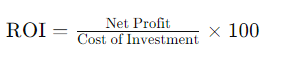
ROI, or Return on Investment, is a key performance metric used to measure the profitability of an investment. It is calculated by dividing the net profit from the investment by the initial cost and multiplying by 100 to get a percentage. The formula is:

Increasing Your ROI

A higher ROI indicates a more profitable investment. Understanding and improving ROI is crucial because it helps businesses evaluate the efficiency of their investments, make informed decisions, and optimize financial performance.

Strategies for Increasing Your ROI

1. Define Clear Objectives and Key Performance Indicators (KPIs)

Setting clear objectives and KPIs is the foundation for increasing ROI. Objectives should be specific and aligned with your business goals, while KPIs will help you measure progress and success. For instance, if your goal is to enhance marketing ROI, your KPIs could include metrics such as customer acquisition cost (CAC), customer lifetime value (CLV), and conversion rates.

Also read: ROI Optimization: Proven Techniques for Better Business

2. Optimize Marketing Strategies

Marketing often represents a significant investment. To enhance ROI, focus on strategies that provide the highest return. Use data-driven insights to:

Target the Right Audience: Utilize customer segmentation and targeting to reach those most likely to convert.

Refine Messaging: Tailor your messaging to resonate with your target audience and address their needs and pain points.

Choose Effective Channels: Invest in channels that deliver the best results based on your data analysis.

Implementing A/B testing can also help identify the most effective marketing approaches and optimize your campaigns accordingly.

3. Leverage Technology and Automation

Technology and automation can play a crucial role in increasing ROI by improving efficiency and reducing costs. Consider:

Automating Repetitive Tasks: Use automation tools to handle routine tasks, freeing up time for more strategic activities.

Utilizing Data Analytics: Invest in analytics tools to gain insights into performance and make data-driven decisions.

Integrating Advanced Software: Implement software solutions that streamline processes and enhance productivity.

4. Enhance Operational Efficiency

Improving operational efficiency can lead to significant cost savings and better ROI. Strategies include:

Streamlining Processes: Identify and eliminate bottlenecks to create more efficient workflows.

Investing in Training: Equip your team with the skills needed to perform their roles effectively.

Optimizing Resource Allocation: Ensure that resources are allocated where they will have the most impact.

5. Focus on Customer Retention

Retaining existing customers is often more cost-effective than acquiring new ones. To improve ROI through customer retention:

Personalize Customer Experiences: Tailor interactions and offers to individual customer preferences.

Implement Loyalty Programs: Reward repeat customers with incentives and exclusive offers.

Provide Exceptional Service: Ensure high levels of customer satisfaction through responsive support and quality service.

6. Regularly Evaluate and Adjust Investments

Continuously assess the performance of your investments to ensure they are delivering the expected returns. Regular evaluations involve:

Analyzing Performance Data: Use performance metrics and analytics to gauge the success of your investments.

Making Data-Driven Adjustments: Adjust strategies based on insights and feedback to improve outcomes.

Reallocating Resources: Shift resources to more effective investments if necessary.

7. Innovate and Improve Offerings

Investing in research and development can lead to enhanced products or services that offer greater value to customers. Strategies include:

Incorporating Customer Feedback: Use feedback to make improvements and align offerings with customer needs.

Staying Updated with Trends: Keep up with industry trends to remain competitive and relevant.

8. Build and Leverage Strategic Partnerships

Collaborating with other businesses or industry leaders can open new avenues for growth and profitability. To maximize ROI through partnerships:

Identify Aligned Partners: Choose partners whose goals and values align with yours.

Leverage Shared Resources: Take advantage of shared resources and expertise to enhance your capabilities.

FAQ

What does ROI stand for and why is it important?

ROI stands for Return on Investment. It is a metric used to assess the profitability of an investment by comparing net profit to the initial cost. It is important because it helps businesses evaluate the effectiveness of their investments and make informed decisions to optimize financial performance.

How can I set clear objectives and KPIs for Increasing Your ROI?

Define objectives that are specific, measurable, achievable, relevant, and time-bound (SMART). Establish KPIs that align with these objectives to measure progress and success. For example, if your objective is to improve marketing ROI, KPIs might include customer acquisition cost, customer lifetime value, and conversion rates.

What are some effective ways to optimize marketing strategies for better ROI?

Focus on targeting the right audience, refining your messaging, and selecting effective marketing channels. Use data-driven insights and A/B testing to identify the most successful approaches and continuously optimize your campaigns for better results.

How can technology and automation contribute to Increasing Your ROI?

Technology and automation can enhance ROI by improving efficiency, reducing costs, and providing valuable insights. Automate repetitive tasks, use data analytics for decision-making, and implement advanced software to streamline processes and boost productivity.

Why is customer retention important for Increasing Your ROI?

Retaining existing customers is often more cost-effective than acquiring new ones. By focusing on customer retention through personalized experiences, loyalty programs, and exceptional service, you can increase customer lifetime value and reduce acquisition costs, leading to improved ROI.

Conclusion

Increasing your return on investment (ROI) is crucial for achieving business success and ensuring that every dollar spent contributes to your bottom line. By implementing the strategies outlined in this guide, you can maximize the profitability of your investments and enhance overall financial performance. Key takeaways for boosting ROI include setting clear objectives and performance metrics, optimizing marketing efforts, leveraging technology and automation, improving operational efficiency, and focusing on delivering exceptional customer experiences. Regularly monitoring and adjusting your strategies based on data-driven insights will help you stay on track and adapt to changing market conditions.

if you need any help with your ROI ? then contact us 
ROI Optimization- HanuiT solutions

ROI Optimization: Proven Techniques for Better Business

ROI Optimization: Proven Techniques for Better Business Outcomes

Optimizing Return on Investment (ROI) is essential for achieving better business outcomes. ROI optimization involves enhancing the efficiency and effectiveness of investments to maximize profitability and growth. In this article, we’ll explore proven techniques to optimize ROI and drive better business outcomes, ensuring that every dollar spent contributes to overall success.

Achieving better business outcomes requires a strategic approach to ROI optimization. By leveraging proven techniques, businesses can improve profitability, streamline operations, and enhance overall performance. Understanding how to optimize ROI effectively can lead to more informed decision-making and a stronger competitive position.

1. Define Clear ROI Goals

To optimize ROI, start by defining clear and specific goals. Determine what better business outcomes look like for your organization—whether it’s increased revenue, reduced costs, improved market share, or enhanced customer satisfaction. Clear goals provide a framework for evaluating ROI and help align efforts toward achieving desired results.

2. Utilize Data Analytics

Data analytics play a crucial role in ROI optimization. By analyzing historical data and tracking key performance indicators (KPIs), you can identify trends, measure the effectiveness of investments, and make informed decisions. Data-driven insights help you understand what drives better business outcomes and where adjustments are needed.

3. Implement Effective Resource Allocation

Proper resource allocation is essential for optimizing ROI. Assess the performance of different departments, projects, or campaigns to determine where resources are most effectively utilized. Allocating resources to high-impact areas ensures that investments are directed toward activities that contribute significantly to better business outcomes.

 Also read: How to Boost Your ROI with Data-Driven Marketing

4. Embrace Technology and Innovation

Incorporate technology and innovative solutions to enhance operational efficiency and productivity. Advanced tools and software can provide valuable insights, automate processes, and streamline operations, all of which contribute to better business outcomes. Staying current with technological advancements ensures that your business remains competitive and agile.

5. Conduct Regular Performance Reviews

Regular performance reviews are vital for continuous ROI optimization. Monitor key metrics, evaluate the success of investments, and adjust strategies as needed. Consistent performance reviews allow you to respond to changes in the market, address potential issues, and implement improvements that drive better business outcomes.

6. Focus on Customer-Centric Strategies

A customer-centric approach is crucial for achieving better business outcomes. Invest in initiatives that enhance the customer experience, such as personalized marketing, responsive support, and user-friendly interfaces. Satisfied customers are more likely to generate repeat business and contribute to overall profitability.

7. Leverage A/B Testing

A/B testing allows you to compare different approaches and identify which yields better results. By experimenting with variations of marketing campaigns, product features, or other elements, you can determine what works best for achieving better business outcomes. This data-driven method helps refine strategies and optimize ROI.

8. Foster a Culture of Continuous Improvement

Encourage a culture of continuous improvement within your organization. Regularly review processes, seek feedback and implement changes that enhance efficiency and effectiveness. A commitment to ongoing improvement supports better business outcomes by ensuring that your strategies evolve with market demands.

9. Monitor and Adjust Strategies

Continuous monitoring and adjustment of strategies are essential for ROI optimization. Regularly review performance data, assess the success of investments, and make necessary adjustments. Staying adaptable ensures that your strategies remain effective and aligned with changing market conditions, supporting better business outcomes.

10. Optimize Resource Allocation

Efficient resource allocation is crucial for maximizing ROI. Assess the performance of different projects, departments, or initiatives to determine where resources can be most effectively used. Allocate resources to high-impact areas that drive better business outcomes and support overall strategic goals.

FAQ

What is ROI optimization?

ROI optimization involves enhancing the efficiency and effectiveness of investments to maximize profitability and improve overall business performance. It focuses on achieving the best possible return on investment through strategic planning and data-driven decision-making.

Why is defining clear ROI goals important?

Defining clear ROI goals provides a framework for evaluating investment success and aligning efforts toward achieving desired outcomes. It ensures that resources are directed towards activities that contribute significantly to business success.

How does data analytics contribute to better business outcomes?

Data analytics provide insights into historical performance and key metrics, helping businesses understand what drives success and where adjustments are needed. This information supports informed decision-making and optimizes ROI.

What role does technology play in ROI optimization?

Technology enhances operational efficiency and productivity by providing valuable insights, automating processes, and streamlining operations. Leveraging advanced tools and solutions contributes to achieving better business outcomes.

How can customer-centric strategies impact ROI?

Customer-centric strategies improve customer satisfaction and loyalty, leading to increased revenue and repeat business. Investing in initiatives that enhance the customer experience contributes to better business outcomes and higher ROI.

What is A/B testing, and how does it help with ROI optimization?

A/B testing involves comparing two versions of a variable to determine which performs better. By testing different approaches and measuring their impact, businesses can identify the most effective strategies for achieving better business outcomes and optimizing ROI.

Why is fostering a culture of continuous improvement important for ROI?

A culture of continuous improvement encourages regular review and enhancement of processes, leading to increased efficiency and effectiveness. This ongoing commitment supports better business outcomes and sustained ROI optimization.

Conclusion

ROI optimization is a dynamic and ongoing process that requires a strategic approach to achieve better business outcomes. By defining clear goals, utilizing data analytics, implementing effective resource allocation, embracing technology, conducting performance reviews, focusing on customer-centric strategies, leveraging A/B testing, and fostering a culture of continuous improvement, you can enhance your ROI and drive success. Adopting these proven techniques will help you maximize the return on your investments and achieve superior business results.

if you need any help with your ROI ? then contact us 
Maximizing ROI- HanuiT solutions

Maximizing ROI: A Step-by-Step Guide to Higher Returns

Maximizing ROI: A Step-by-Step Guide to Higher Returns

In the world of business and investments, maximizing ROI (Return on Investment) is essential for achieving sustainable growth and profitability. Whether you’re managing a marketing campaign, investing in new technology, or running a business, understanding and implementing strategies to maximize ROI can significantly enhance your financial outcomes. This step-by-step guide will walk you through effective methods to boost your returns.

Maximizing ROI (Return on Investment) refers to strategies and actions taken to achieve the highest possible return from an investment relative to its cost. ROI is a key performance metric used to evaluate the efficiency or profitability of an investment, project, or business initiative. It helps measure how effectively resources (time, money, or effort) are being utilized to generate profit or achieve specific goals.

Understanding ROI

Return on Investment (ROI) is a performance measure used to evaluate the efficiency of an investment or compare the profitability of several investments. ROI is calculated using the formula:

Maximizing ROI

A higher ROI indicates that the investment gains compare favorably to the cost. Maximizing ROI involves optimizing various factors to ensure that every dollar spent generates the highest possible return.

Step 1: Set Clear Objectives

Before embarking on any investment or project, it’s crucial to define clear, measurable objectives. Determine what success looks like and how you will measure it. Objectives might include increasing revenue, reducing costs, or enhancing customer satisfaction. Clear objectives provide a benchmark against which to measure ROI.

Step 2: Analyze and Select the Right Investments

Conduct thorough research and analysis to identify investment opportunities that align with your objectives. Consider the potential risks and returns of each option. Evaluate past performance, market conditions, and the credibility of the investment. Prioritize investments with a track record of high returns and low risk.

Step 3: Optimize Resource Allocation

Effective allocation of resources is key to maximizing ROI. Allocate budget and resources to initiatives with the highest return potential. Avoid spreading resources too thinly across multiple projects. Focus on high-impact areas where your investment is likely to yield the best results.

 Also read: 10 Strategies to Improve Your ROI in Digital Marketing

Step 4: Monitor and Adjust Strategies

Regularly track the performance of your investments and initiatives. Use key performance indicators (KPIs) and analytics tools to measure progress against your objectives. If certain strategies are underperforming, be prepared to adjust or pivot your approach. Continuous monitoring and adaptation are vital for sustaining high ROI.

Step 5: Implement Cost Control Measures

Controlling costs is essential for maximizing ROI. Identify areas where you can reduce expenses without compromising quality or performance. Implement cost-saving measures such as renegotiating contracts, streamlining operations, or leveraging technology to improve efficiency.

Step 6: Leverage Technology and Automation

Investing in technology and automation can significantly enhance your ROI. Tools and software can streamline processes, reduce manual labor, and provide valuable insights through data analysis. Embrace innovations that can improve productivity and profitability.

Step 7: Evaluate and Learn from Outcomes

After completing an investment or project, evaluate the outcomes against your objectives. Analyze what worked well and what didn’t. Use these insights to refine your strategies and improve future investments. Learning from past experiences is crucial for maximizing ROI over time.

Step 8: Adjust Strategies as Needed

Be prepared to adjust your strategies based on performance data and changing circumstances. If certain approaches are not delivering the expected results, refine your tactics or pivot to alternative solutions. Flexibility and adaptability are crucial for maximizing ROI.

Benefits: Maximizing ROI: A Step-by-Step Guide to Higher Returns

Higher Financial Returns: Implementing effective strategies ensures greater profitability from investments, leading to increased financial gains.

Enhanced Efficiency: Streamlined processes and optimal resource allocation improve operational efficiency, reducing waste and maximizing output.

Improved Investment Decisions: A structured approach helps in making informed investment choices, aligning with strategic goals and risk tolerance.

Effective Cost Management: Identifying and controlling costs helps in reducing unnecessary expenses, thus enhancing overall profitability.

Stronger Financial Health: Maximizing ROI contributes to better financial performance, providing a solid foundation for future growth and stability.

Strategic Growth Opportunities: Higher returns create the financial capacity for business expansion and pursuing new growth opportunities.

Competitive Advantage: Efficient management of investments can improve market position and provide a competitive edge in your industry.

Risk Mitigation: A comprehensive ROI strategy helps in identifying potential risks and implementing measures to mitigate them effectively.

FAQs

What is ROI and why is it important?

ROI stands for Return on Investment. It measures the profitability of an investment relative to its cost. Maximizing ROI is important because it helps ensure that resources are used efficiently and effectively, leading to higher financial returns.

How can I calculate ROI?

ROI is calculated using the formula:

Maximizing ROI

Net Profit is the revenue generated from the investment minus the cost of the investment.

What are some strategies for maximizing ROI?

Strategies for maximizing ROI include setting clear objectives, analyzing and selecting the right investments, optimizing resource allocation, monitoring and adjusting strategies, implementing cost control measures, leveraging technology and automation, and evaluating outcomes.

How often should I review my ROI?

It’s important to regularly review ROI to ensure investments are performing as expected. Depending on the nature of the investment or project, this could be monthly, quarterly, or annually.

Can technology help in maximizing ROI?

Yes, technology can significantly aid in maximizing ROI by improving efficiency, reducing costs, and providing data-driven insights. Tools for analytics, automation, and process management can enhance overall performance and profitability.

Conclusion

Maximizing ROI involves a strategic approach to investments and resource management. By setting clear objectives, selecting the right investments, optimizing resource allocation, and leveraging technology, you can significantly enhance your financial returns. Regular monitoring and adaptation, coupled with cost control and learning from outcomes, will help ensure that your investments yield the highest possible returns.

if you need any help with your ROI ? then contact us 
Email Marketing ROI- HanuiT solutions

How do you Measure Email Marketing ROI effectively?

How to Measure Email Marketing ROI Effectively:-

Email marketing remains one of the most cost-effective ways to reach and engage your audience. However, to truly understand its impact, effectively measuring your email marketing ROI (Return on Investment) is crucial. By doing so, you can refine your strategies, improve your campaigns, and ensure that your marketing dollars are well spent. Here’s how you can measure email marketing ROI effectively.

Understanding Email Marketing ROI:-

Email marketing ROI is a metric that shows the profitability of your email campaigns. It compares the revenue generated from email marketing to the amount spent on it. A high ROI indicates that your email marketing efforts are yielding significant returns.

Calculating Email Marketing ROI:-

To measure email marketing ROI effectively, you need to follow these steps:

1. Determine Total Revenue from Email Campaigns:

Track the revenue generated from your email campaigns. This includes direct sales from email links and any subsequent purchases influenced by your emails.

2. Calculate Total Costs:

Add up all the costs associated with your email marketing. This includes software subscriptions, design costs, copywriting fees, and any other expenses.

3. Apply the ROI Formula:

Use the following formula to calculate ROI:

Email Marketing ROI

Where Net Profit is the revenue generated from the campaign minus the total cost of the campaign.

 Also read: How to Create a WordPress Backup? Step-by-Step solution

Email Marketing ROI

Key Metrics to Track:-

To measure email marketing ROI effectively, you should also monitor several key performance indicators (KPIs):

1. Open Rate:

The percentage of recipients who open your emails. A higher open rate often leads to better engagement and conversions.

2. Click-Through Rate (CTR):

The percentage of email recipients who click on links within your email. This metric helps gauge the effectiveness of your email content and design.

3. Conversion Rate:

The percentage of recipients who complete a desired action (e.g., making a purchase) after clicking through your email.

4. Bounce Rate:

The percentage of emails that couldn’t be delivered. High bounce rates can affect your sender’s reputation.

5. Unsubscribe Rate:

The percentage of recipients who opt out of your email list. Monitoring this helps you understand how your content resonates with your audience.

Tools to Measure Email Marketing ROI

To measure email marketing ROI effectively, leveraging the right tools is essential. Here are a few:

1. Email Marketing Platforms:

Tools like Mailchimp, Constant Contact, and SendinBlue offer built-in analytics to track ROI.

2. Google Analytics:

Use UTM parameters to track email campaigns and measure their impact on website traffic and conversions.

3. CRM Systems:

Customer Relationship Management systems help track customer interactions and sales data, providing a comprehensive view of ROI.

Tips for Improving Email Marketing ROI:-

1. Segment Your Audience:

Divide your email list into smaller segments based on demographics, behaviors, or preferences. Tailored emails can lead to higher engagement and conversions.

2. Personalize Your Emails:

Use personalization techniques such as addressing recipients by name and recommending products based on past purchases.

3. Optimize for Mobile:

Ensure your emails are mobile-friendly, as a significant portion of users access emails on their smartphones.

4. Test and Refine:

Continuously A/B test different elements of your emails (subject lines, content, images) to determine what works best

5. Use UTM Parameters:

Add UTM parameters to your email links to track the effectiveness of different campaigns in Google Analytics.

6. Regular Reporting:

Create regular reports to monitor performance over time and adjust your strategy as needed.

Know Your Email Marketing Goals:

Email marketing is a powerful tool for businesses looking to connect with their audience, drive engagement, and increase conversions. However, to make the most of your email marketing efforts, it’s essential to know your email marketing goals. Clear, well-defined goals not only guide your strategy but also provide a benchmark against which you can measure your success.

Why Setting Goals is Important:

Setting goals is crucial for several reasons:

1. Focus and Direction: Goals provide a clear focus and direction for your email marketing efforts. They help you understand what you want to achieve and how to allocate your resources effectively.

2. Performance Measurement: With defined goals, you can measure your performance accurately. This helps in understanding what works, what doesn’t, and where to make improvements.

3. Motivation and Accountability: Goals motivate your team to achieve specific outcomes and hold them accountable for their performance.

How to Set Effective Email Marketing Goals:-

To set effective email marketing goals, follow these steps:

1. Align with Business Objectives:

Ensure your email marketing goals align with your broader business objectives. This ensures that your efforts contribute to overall business success.

2. Make Goals SMART:

SMART goals are Specific, Measurable, Achievable, Relevant, and Time-bound. For example, instead of setting a goal to “increase open rates,” set a SMART goal to “increase open rates by 15% over the next three months.

3. Use Data to Inform Goals:

Analyze past email campaign performance and customer data to set realistic and informed goals. This helps in understanding what is achievable and what needs improvement.

4. Prioritize Goals:

Prioritize your goals based on their importance and impact on your business. This ensures you focus on the most critical objectives first.

5. Regularly Review and Adjust Goals:

Continuously monitor your progress towards your goals and adjust them as needed. This helps in staying responsive to changes in the market and customer behavior.

 Also read: How to Use VR in Web Design: Tools and Techniques

FAQ:

Q: What is email marketing ROI?

A: Email marketing ROI measures the profitability of your email campaigns by comparing the revenue generated to the costs incurred.

Q: How do I calculate email marketing ROI?

A: Use the formula:

Email Marketing ROI

Q: What are the key metrics to track for email marketing ROI?

A: Key metrics include open rate, click-through rate (CTR), conversion rate, bounce rate, and unsubscribe rate.

Q: What tools can help measure email marketing ROI?

A: Tools like Mailchimp, Google Analytics, and CRM systems are useful for tracking and measuring email marketing ROI.

Q: How can I improve my email marketing ROI?

A: Improve ROI by segmenting your audience, personalizing emails, optimizing for mobile, and continuously testing and refining your campaigns.

Q: What is a good ROI for email marketing?

A good ROI for email marketing varies by industry, but a common benchmark is a return of $38 for every $1 spent.

Conclusion:

Measuring email marketing ROI effectively is essential for optimizing your campaigns and ensuring that your marketing efforts are delivering the desired returns. By defining clear goals, tracking essential metrics, calculating costs, determining revenue, and using the right tools, you can gain valuable insights into your email marketing performance and make data-driven decisions to enhance your strategy.

Book  a consultation with us